
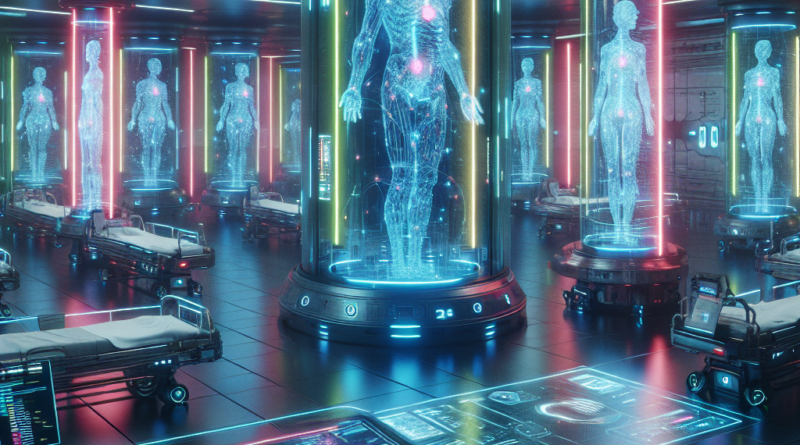
In Harvard study, AI offered more accurate diagnoses than emergency room doctors
In Harvard Study, AI Offered More Accurate Diagnoses Than Emergency Room Doctors
A recent study conducted by Harvard University has brought forward intriguing evidence that artificial intelligence (AI) systems can outperform emergency room doctors in making accurate diagnoses. As the use of AI systems becomes increasingly prevalent in the healthcare industry, this study underscores the potential for AI to revolutionize patient outcomes by enhancing diagnostic accuracy and efficiency.
The study involved AI systems designed to evaluate symptoms and suggest diagnoses based on the same data available to physicians in a hospital’s emergency room (ER). Conducted at one of Harvard’s affiliated hospitals, the research aimed to ascertain the reliability of AI as an aide to human medical judgment, as well as its capability to act autonomously in diagnostic settings.
According to the findings, AI systems accurately diagnosed a range of conditions more effectively than their human counterparts. This revelation is particularly significant in the fast-paced environment of emergency departments, where quick and precise decision-making is imperative. The study illustrates AI’s ability to swiftly analyze vast datasets and recognize patterns that might be missed by doctors under pressure.
One of the key breakthroughs of this research is the AI’s adeptness at diagnosing conditions that often mimic others due to similar symptoms, such as various forms of abdominal pain, diseases with overlapping respiratory symptoms, and uncommon presentations of common ailments. With advanced machine learning algorithms, the AI demonstrated it could process numerous potential outcomes simultaneously, assess probabilities, and recommend the most accurate diagnoses with a high degree of confidence.
The Harvard study utilized patient data from thousands of ER visits, ensuring that the AI had a robust dataset representative of real-world conditions. This enabled the system to learn effectively and improve its diagnostic capabilities over time. Additionally, the AI’s performance was benchmarked against a group of seasoned ER doctors, emphasizing the competitive edge that machine learning platforms can provide.
While this study highlights the prowess of AI, it also sparks important discussions about the future role of technology in medicine. There is a growing acknowledgment that AI tools can provide substantial support to healthcare professionals, potentially leading to a symbiotic relationship where doctors use AI to back their decisions, thus improving overall patient care.
AI integration, however, does not come without its challenges. Ethical considerations, patient privacy, and the transparency of AI decisions remain areas requiring careful scrutiny. Moreover, there are concerns about the replacement of human jobs, a narrative often associated with AI advancements across various sectors.
Nevertheless, most experts agree that AI is best utilized as a complementary tool that enhances the capabilities of human practitioners rather than replacing them. In high-stakes environments such as emergency rooms, AI can act as an invaluable second opinion, reducing the likelihood of diagnostic errors, which are still a significant contributor to patient morbidity and mortality globally.
Another benefit of incorporating AI in emergency settings is its potential to optimize resource allocation. By ensuring that patients are promptly and correctly diagnosed, hospitals can improve triage accuracy, reduce unnecessary treatments, and streamline patient flow within the ER, leading to lowered costs and enhanced care efficiency.
Furthermore, AI systems are not susceptible to fatigue—a commonplace issue among doctors working long shifts—which could lead to lapses in judgment or diminished analytical capacity. This attribute positions AI as consistently reliable under conditions where human focus might dwindle.
This groundbreaking Harvard study paves the way for further exploration into the full potential of AI in healthcare. Continued research and development will be necessary to refine these technologies and address existing limitations, including assurance of algorithmic fairness and minimization of biases.
In conclusion, while AI’s role in medical diagnostics is still evolving, this study substantiates its compelling utility as a tool for enhancing emergency medical care. As AI technology advances, the synergy between AI and human doctors is expected to transform healthcare delivery, improving both diagnostic accuracy and patient outcomes across various medical environments.